We study plankton communities in their natural environment, with the idea of not interfering with species interactions and dynamics. Our objectives are to study bottom-up (e.g. water physics and chemistry changes like climate warming and eutrophication) and top-down (natural enemies like parasites and grazers) controls of plankton community change. We want to understand interactions and mechanisms that regulate community composition and relative abundances of species, and predict community dynamics across scales of space and time, including the forecasting of cyanobacterial blooms.
Eawag Plankton Camera
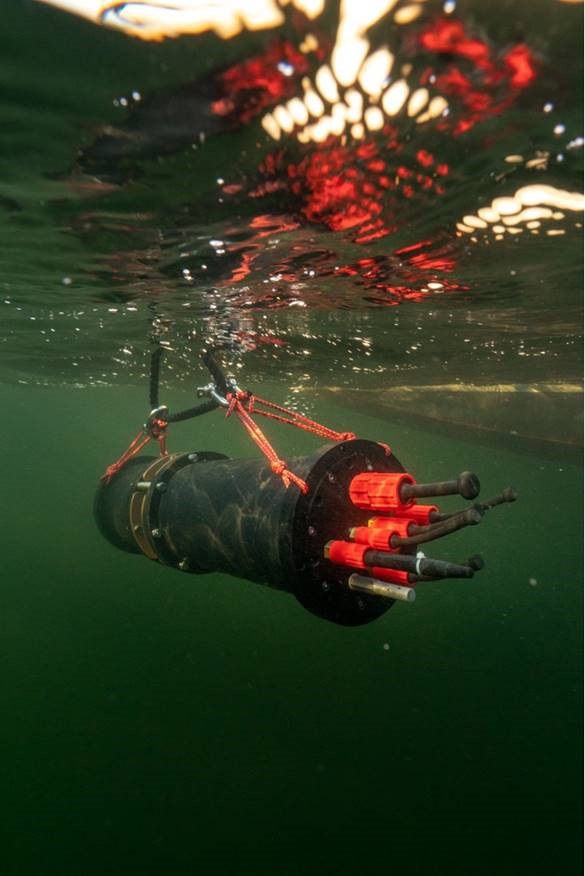
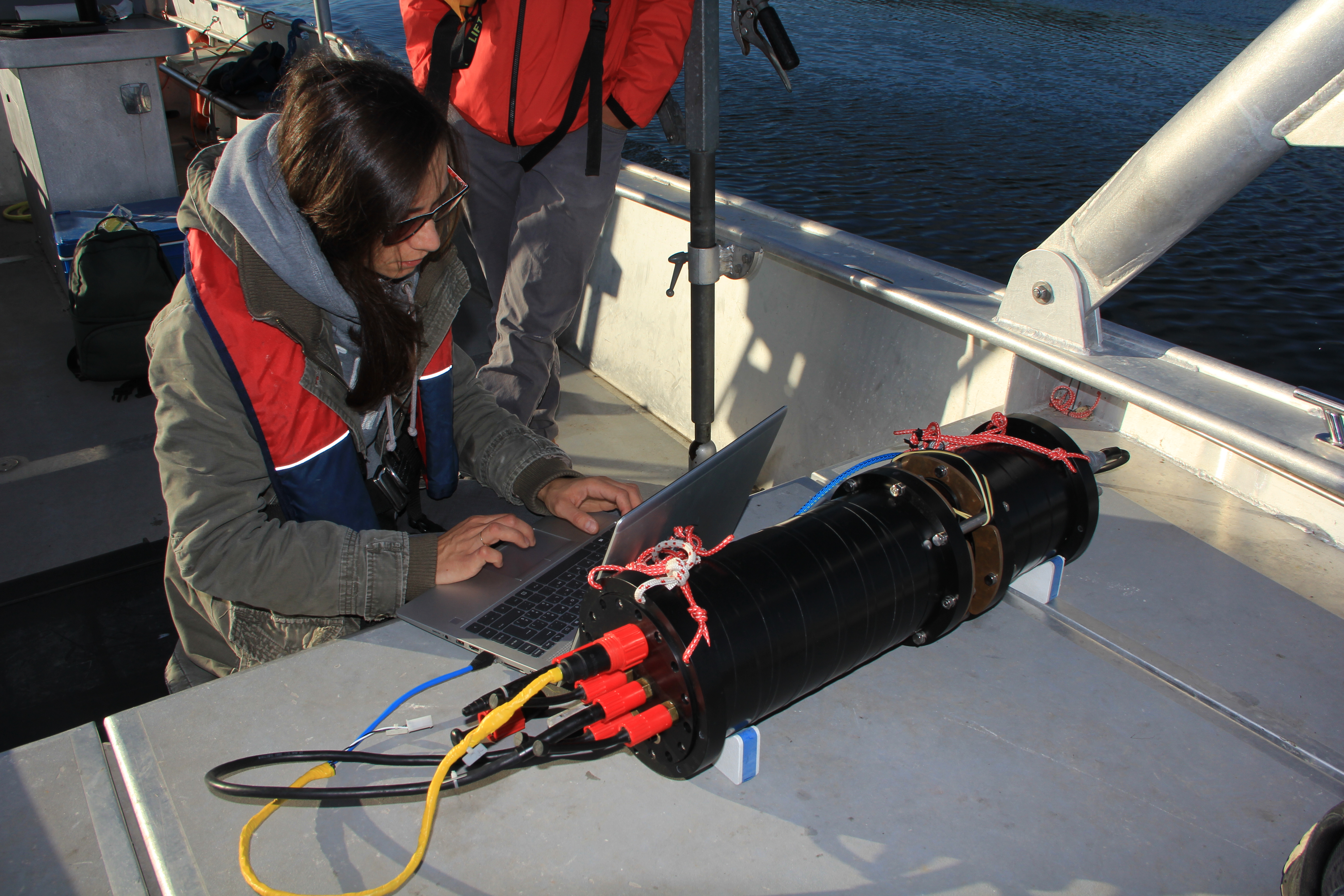
The Eawag Plankton Camera allows imaging of planktonic microbes in their natural environment without disrupting or disturbing natural aggregation of species. The camera is a darkfield dual-magnification microscope that uses a USB3 machine vision camera with and embedded ARM-based computer for real-time object detection and recording. A high-power white LED is used to form a converging cone of illumination. Only scattered light from objects in the volume are imaged and hence objects have a bright appearance on a dark background. Dark field illumination provides high contrast colour images with no background, assisting image analysis and classification.
The underwater dual-magnification camera is designed based on the Scripps Plankton Camera system by the Jaffe Laboratory of Underwater Imaging at the University of California, San Diego (Scripps Institution of Oceanography), in collaboration with the Pomati Group of Phytoplankton Ecology at Eawag. The instrument was funded by the Swiss Federal Office for the Environment (BAFU), grant num. Q392-1149.
Research topics
Our research focuses on revealing the diversity and dynamics of plankton communities across space and time.
Innovative tools to observe the invisible
To capture the rapid dynamics of plankton, we use automated monitoring systems combining in situ imaging and environmental sensors. While traditional monitoring typically samples lakes once per month, our systems observe plankton communities hourly, revealing who is present and how communities change in near real time. These high-frequency observations provide a unique dataset worldwide and open a new window into understanding the hidden dynamics of plankton ecosystems.
Exploring microbial diversity through metagenomics.
Freshwater microbial communities include phytoplankton, zooplankton, bacteria, and viruses, forming an enormously diverse ecosystem. Using metagenomics, we investigate not only which organisms are present but also their genetic diversity, metabolic capabilities, and evolutionary dynamics. By analysing time series of samples, we aim to understand how microbial populations evolve, how their interactions change over time, and how their functional potential shifts in response to environmental conditions.
Understanding interactions in complex plankton communities.
Plankton biodiversity is maintained by a dense network of interactions among hundreds of species and their environment. Using trait-based approaches, we investigate how individual organisms respond to environmental conditions and how these responses scale up to shape community structure and aquatic food webs.
Understanding and predicting cyanobacterial blooms
Harmful cyanobacterial blooms are increasing worldwide and threaten water quality and ecosystem health. Our research seeks to understand the ecological and evolutionary mechanisms that trigger these events within lake ecosystems and their food webs. We combine information across multiple levels – from genes and metabolites to populations, communities, and ecosystem dynamics, and integrate these data into mechanistic models to predict when and why blooms occur.
Predicting future ecosystem change
Through statistical models and machine learning, we analyse large ecological datasets to forecast plankton dynamics, cyanobacterial blooms, and water quality.
Plankton camera manufacturer
We are in close collaboration with https://www.guatek.com/, which is the current manufacturer of the Eawag Plankton Camera.
Impressions




 AQUASCOPE